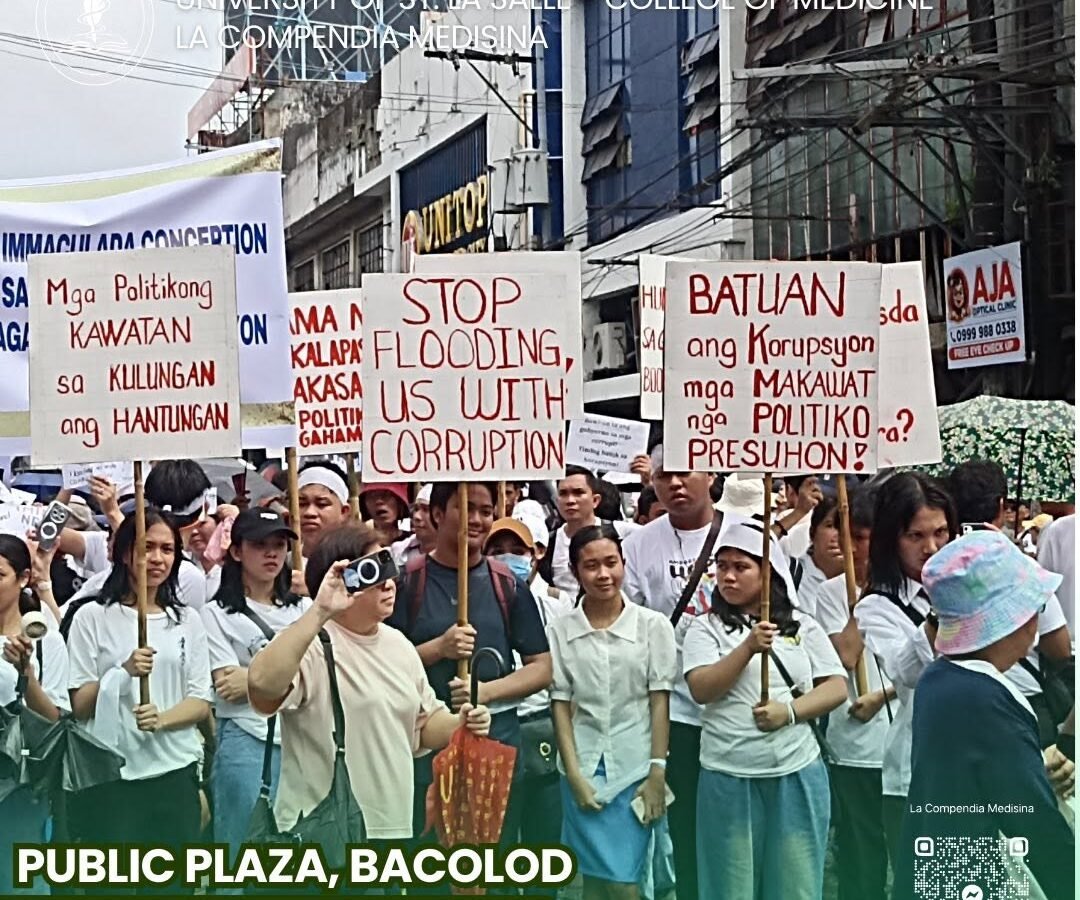
𝙀𝘿𝙄𝙏𝙊𝙍𝙄𝘼𝙇: September 21, 2025

Movement is medicine… corruption is the disease.
Today we witnessed the body of the nation rising against a pervasive sickness—corruption deeply rooted in governance, ignored for too long by those meant to heal it.
Recent mainstream Senate Blue Ribbon Committee hearings peeled away layers of deception: alleged “ghost” flood-control projects in Bulacan—contracts worth billions of pesos were paid to favored contractors for projects that either remained unfinished, poorly-built, or nonexistent. Testimonies naming lawmakers and DPWH officials demanding kickbacks have pushed the issue from whispers into headlines. This is not just a financial crime—it is outright moral betrayal. Funds intended to shield families from floods were stolen, leaving communities to wade through waters of neglect while trust in public institutions has drowned.
The recent exposé is like an abscess bursting, a hidden wound in the system finally forced into the open. The response of the people has been immediate and fierce: communities, church leaders, business chambers have condemned the scandal, demanding transparency and accountability from those in power. On social media and in the streets, Filipinos are declaring that corruption is not only unlawful but intolerable. Protests and petitions show a collective cry that justice is overdue and integrity must return to governance.
Outrage sweeps across the country like a fever. One spark was enough for the fire to catch, and it continues to burn. People are no longer willing to accept corruption as a political inevitability—the people want justice, and the people deserve it now.
Government has prescribed its first remedies—suspending dozens of officials while investigations unfold. Some leaders have spoken out, urging vigilance, but suspicion lingers: will these measures cure the disease, or are they just painkillers to dull the outrage?
Both sides of the fence are mobilizing: the people marching to express dissent and the officials probing into the heart of the issue. But the test before us is twofold—whether institutions can finally cleanse themselves of systemic rot, and whether leaders will embrace the deeper moral duty of public service: to protect, not plunder.
If corruption is the sickness and movement is the medicine, then integrity is the lasting cure. True healing will begin when reform is guided by conscience, and when every leader remembers that public office is a moral duty, not a personal opportunity.
Bacolod Pictures by: Audrey Rellos
Manila pictures by: Shechem Rosaut